

A practicing nail technician known for her standards mindset has reviewed professional research on procedure safety and brings that same discipline into everyday client work, where small process mistakes turn into lifting, irritation, and nail plate damage over time.
The nail world is full of advice that sounds confident and repeats well online. The problem is that some of those “truths” are just salon folklore. They don’t always cause an immediate disaster, which is why they survive. They simply create small, avoidable mistakes that show up later as lifting, tenderness, peeling, and nails that feel exhausted after removal.
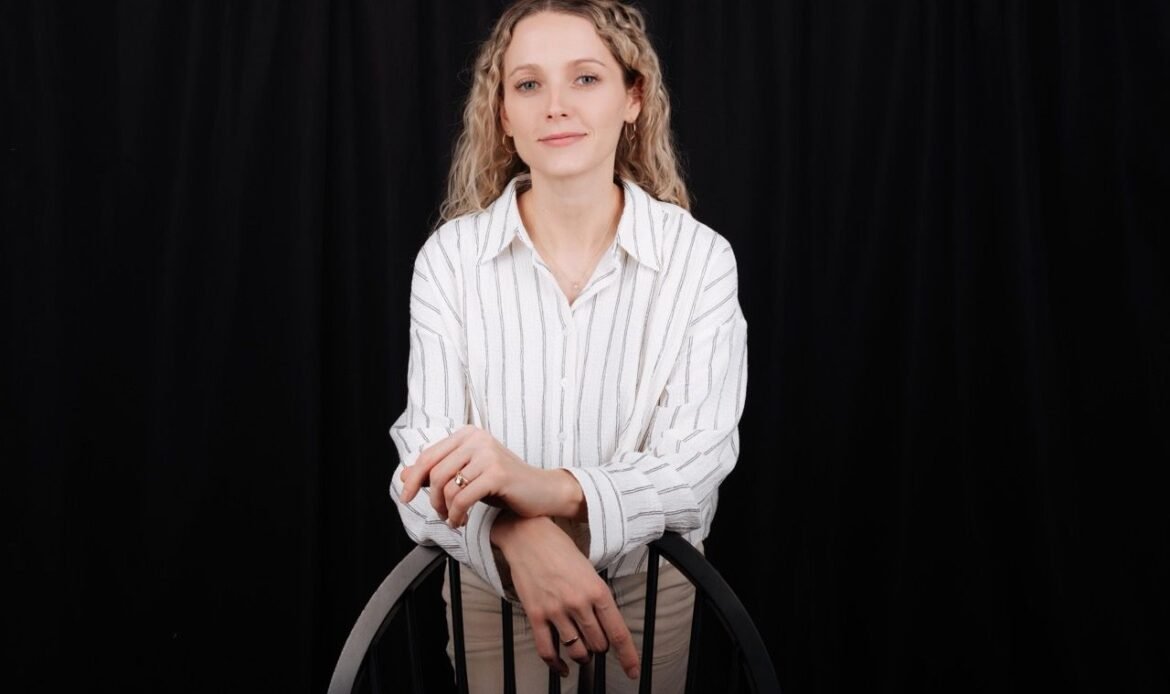
That’s why a practicing nail technician, Viktoriia Shykyriava, builds her work around what happens after the appointment, not during the photo. She currently works at LINEL Beauty Industry in Charlotte, North Carolina, where she keeps seeing the same storyline play out: a set looks solid on day one, then real life starts applying pressure and weak points reveal themselves in predictable zones. The difference is that she doesn’t treat those outcomes as the client’s bad luck or bad nails, but as a process trace. Viktoriia brings a standards-and-safety lens that’s rare in the industry. She’s a member of the International Association of Professional Nail Salon Owners and served as a peer reviewer on a journal paper examining controlled microdermabrasion safety for sensitive skin. She’s brought the same standards into public, high-traffic settings such as the North Carolina Bridal & Wedding Expo, a large regional bridal trade event in North Carolina, where consultations are brief and clients want clear answers.
Over time, she noticed the same five misconceptions driving most avoidable problems in wear, comfort, and nail plate condition. Here is how Viktoriia Shykyriava breaks them down and what she replaces them with.
Principle 1: Durability Without Damage
In Viktoriia Shykyriava’s system, prep is not a “make it stick at any cost” moment. It is a controlled step with a clear ceiling, because aggressive abrasion can create short-term adhesion and long-term instability: sensitivity, peeling, and a nail plate that stops tolerating product cycle after cycle. She keeps pressure light, removes only what is necessary, and builds durability through correct product compatibility and reliable curing — not by sanding the surface into submission.
One reason she is strict about this is that clients often ask for the wrong kind of intensity. “Sometimes clients ask for heavier pressure or deeper work around the cuticle and sidewalls because they assume roughness equals durability,” the expert says. “Then I have to explain that aggressive abrasion will make the nail plate more sensitive and less stable over time.”
Her outcome standard is practical: if nail quality worsens month to month, the process is failing, even if each fresh set looks good on day one.
Principle 2: Every Problem Has a Step That Caused It
Viktoriia Shykyriava does not ignore client behaviour like hot water, picking, and using nails as tools can absolutely shorten wear. But she treats “client fault” as the last step in the diagnosis, not the first. In her practice, recurring lifting almost always points to a controllable variable: contamination, rushed prep, uneven pressure, a product system that does not match the nail, or curing mistakes that look fine at first and fail later.
That discipline is shaped by work she has done outside day-to-day salon services. Viktoriia served as a peer reviewer on a journal manuscript focused on safety in controlled microdermabrasion for sensitive skin. In this context outcomes are examined through procedure parameters and measurable markers, not assumptions about the person receiving the service.
“Clients can definitely shorten wear, hot water, picking, and using nails as tools. But if the nail technician stops at blaming the client, they miss what usually causes lifting: contamination, rushed prep, uneven pressure, a system that doesn’t match the nail, or curing mistakes that look fine at first and fail later,” Viktoriia says.
If lifting repeats in predictable zones, the process is leaving fingerprints and her job is to find which step is producing the failure.
Principle 3: Gentle Removal Is Non-Negotiable
A tidy station can still spread contamination if a tool touches skin and then touches product bottles, lamp buttons, drawers, or files. Viktoriia treats hygiene as a choreography problem: what touches skin must not return to shared touchpoints during the appointment, even if everything looks visually neat.
In her services, she separates skin-contact items from shared surfaces and keeps product containers and equipment controls in a clean zone only. The goal is not perfectionism. The goal is a sequence where cross-contact cannot happen by habit.
“Hygiene is handling rules,” Viktoriia says. This is where her standards mindset shows up again: if the process relies on “remembering to be careful,” it will fail under pressure. If the process is structured, it stays safe even on a busy day.
Principle 4: Clean Tools Are Not a Preference
Viktoriia treats curing as a technical step, not a formality. The result depends on lamp output and wavelength, bulb condition, cure time, layer thickness, and the chemistry of the product being used. When curing is incomplete, a set can look normal at first — then fail through premature wear, softness, irritation, or lifting.
Her approach is to match products to the lamp, control layer thickness, and treat cure time as a parameter instead of a guess. That is how she keeps performance consistent across real life, not just in the photo.
“Curing is not automatic. Research on UV-curable nail gels shows polymerization efficiency depends on the formulation and photoinitiator system, and studies measuring conversion and residual monomers confirm that lamp wavelength, exposure conditions, and gel chemistry change what actually cures,” the expert explains. “If curing is incomplete, the set can look fine right away, but performance drops and the risk of irritation goes up.”
Principle 5: Creativity Needs a Safe Base
For Viktoriia Shykyriava, removal is where nail condition is protected or degraded. Fast, aggressive removal can cause peeling and tenderness that only becomes obvious after a few cycles, when the nail plate starts to look and feel “tired,” even if every fresh set is visually flawless.
This is where her standards logic becomes non-negotiable: if nail quality worsens month to month, the process is failing — regardless of how good the result looks on day one.
“Any time removal turns into pulling, prying, or scraping, the nail plate takes the hit,” the expert explains. “Dermatologists describe this kind of trauma as a cause of onychoschizia or layered splitting. It’s why I treat removal as part of the service, not something to rush.”
She treats the ideas shared above (not the myths, of course) as a training problem across the industry. Alongside client work, she is regularly invited for professional consultations and expert evaluation of procedures, while her case-based standards are used to shape training materials and working guidelines for other specialists. She shares her safety- and client-oriented approach inside the International Association of Professional Nail Salon Owners, a membership group that provides education and business-development support for nail salon owners and people training for that profession.
When Viktoriia Shykyriava mentors newer technicians to work with controlled prep, disciplined hygiene, reliable curing, and safe removal, clients get steadier wear and fewer avoidable nail plate issues without learning the hard way.