

“Builder,” “rubber base,” “hard gel,” “soft gel,” “acrygel,” “dip,” “overlay,” “extension.” The terminology keeps multiplying, yet real service outcomes still depend on three material variables: chemistry, built architecture, and removal route. Once those three stop matching each other, the result appears fast: lifting, cracking, thinning, pain, and, with growing frequency, dermatitis that extends beyond the fingers.
Dermatology literature has already established a direct association between modern long-wear systems and allergic contact dermatitis related to acrylates and methacrylates. That clinical pattern carries more weight in 2026 than it did five years ago because service frequency has increased. The market keeps expanding, and consumers keep moving their spending toward routines that promise measurable wear and visible performance. Selection reflects trade-offs between durability, structure, and exposure.
Why classification matters now
Nails sit inside recurring beauty spending, and industry data reflects that shift. Industry data shows continued growth driven by performance-based consumer evaluation. Once durability becomes a commercial demand, formulation changes follow: formulation shifts toward higher performance systems. Dermatologists see the downstream effect. Repeated exposure raises sensitization risk, and nail services create repeated exposure by design.
A second source of pressure comes from technical convergence. The Indian Journal of Dermatology, Venereology and Leprology describes modern nail cosmetics as more than surface decoration. They now extend across enhancement procedures and removal practices that alter nail unit biology through infection risk, mechanical trauma, and irritant reactions.
A third source of pressure comes from safety narratives that swing between reassurance and alarm. A 2025 review reported predominantly UVA emission with high device variability. That mix of low modeled risk, unresolved uncertainty, and wide technical variability makes method labeling more necessary, not less.
A classification that survives real wear
A useful taxonomy cannot treat brand language as scientific classification. A nail method belongs to a class only after three questions have been answered:
What polymer system forms the coating?
What structure does the technician build: thin coat, overlay, or full extension?
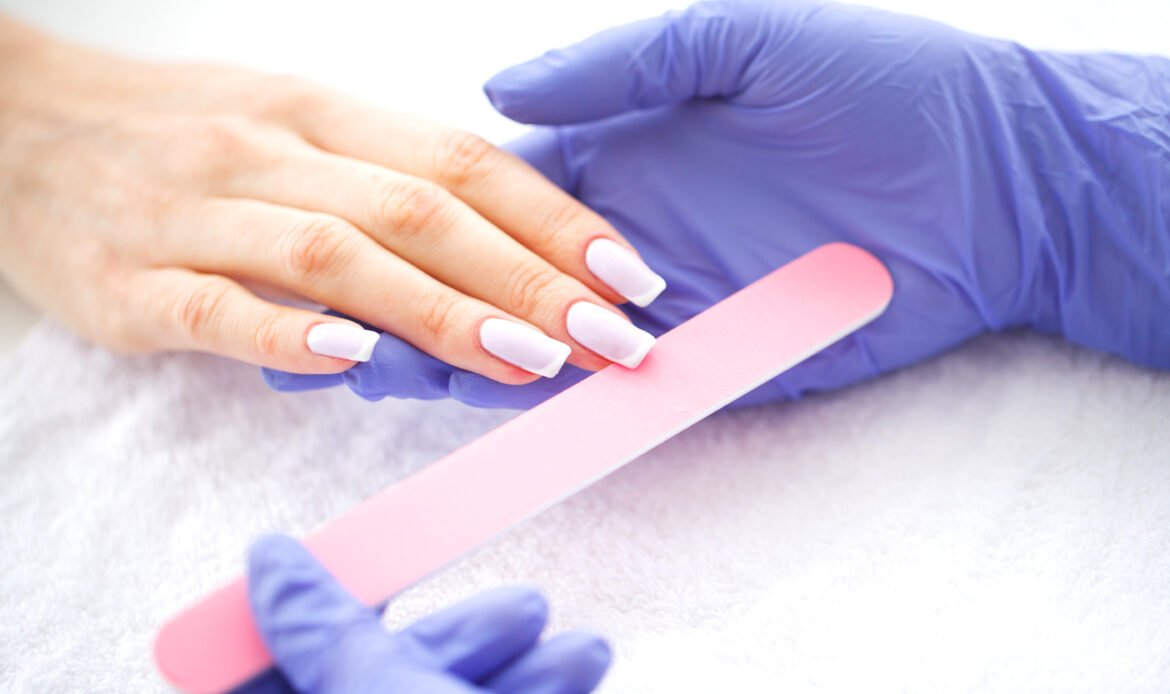
How does removal take place: wipe, soak, or file?
Once the class becomes explicit, performance boundaries become easier to predict: flexural behavior, brittleness, lifting pattern, removal-related damage, and sensitization hotspots.
| Method class | Chemistry | Structure | Removal |
| Lacquer | Solvent-based film formers | Thin coat | Wipe-off |
| Gel polish | Photopolymerized acrylates | Thin, flexible | Soak-off |
| Structured soak-off (BIAB/rubber base) | Photopolymerized acrylates | Overlay, micro-apex | Soak-off + filing |
| Hard gel | Photopolymerized acrylates (high crosslinking) | Rigid overlay/extension | File-off |
| Acrylic (liquid + powder) | Self-curing acrylates | Rigid overlay/extension | File-off |
| Hybrid (acrygel/polygel) | Acrylate composites | Rigid overlay/extension | File-off |
| Dip systems | Resin + powder polymers | Medium overlay | File-off / soak-off |
| Fiber repair | Resin-based systems | Local reinforcement | Targeted file-off |
By composition, gel coatings depend on photoinitiators and (meth)acrylate monomers such as 2-hydroxyethyl methacrylate (HEMA) and related esters. UV/LED exposure initiates free-radical polymerization and hardens the film. Incomplete curing leaves residual monomer near the skin and is linked to allergic reactions.
What each method family actually does
Wear and appearance follow mechanics more than slogans. Failures usually fall into two groups: loss of adhesion or brittle fracture. The class determines which failure dominates.
Photopolymerized soak-off systems
Gel polish and builder-in-a-bottle overlays share the same curing mechanism. UV/LED exposure drives polymer formation in a (meth)acrylate matrix. Gel polish aims for a thin, flexible coating. Structured soak-off builders aim for a thicker overlay that can carry more load and reduce bending.
Their failure pattern appears when flexibility is asked to perform like structure. If a client tries to wear added length on a system designed for thin movement, the free edge flexes, stress concentrates near the sidewalls, and the coating separates at the stress line.
Sensitization concentrates in operational errors: skin contact with uncured material, cuticle flooding, and incomplete curing.
Photopolymerized file-off gels: hard gel, sculpting gels, many high-structure salon builders
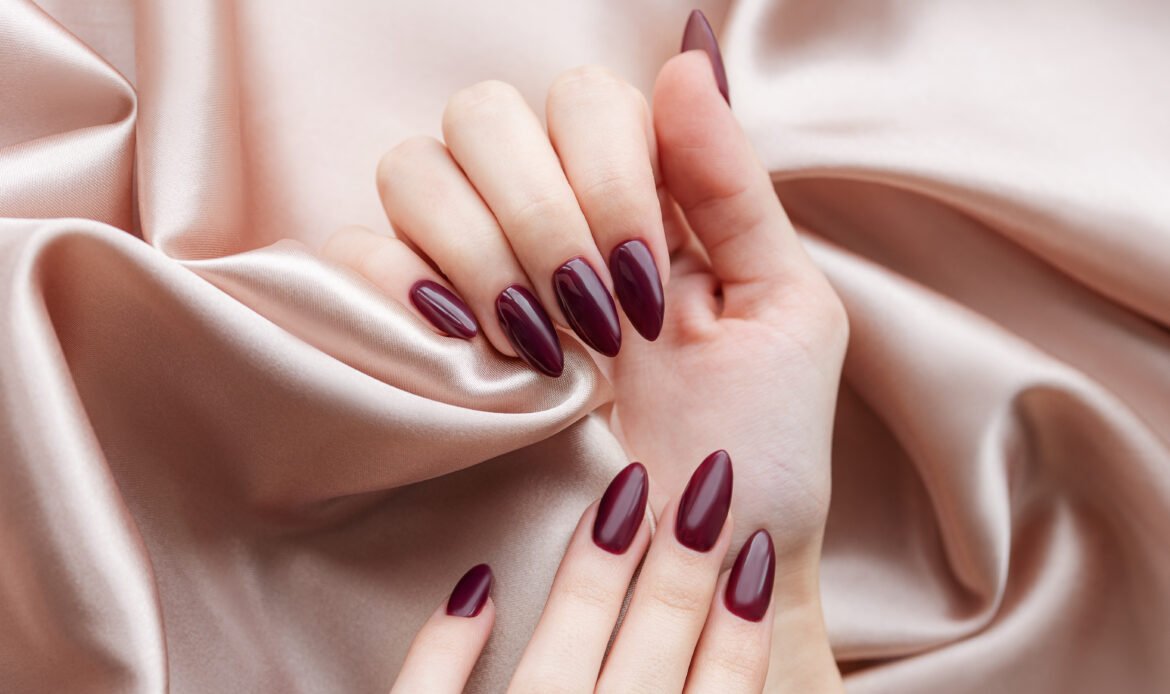
Hard gel behaves like a structural polymer network. Greater rigidity supports longer length and sharper shapes, but that rigidity also pushes stress into the adhesion zone. When the architecture ignores load distribution and the technician builds a flat overlay without a functional apex, the product cracks instead of bending.
Failure typically starts as brittle cracking across the apex, followed by lifting. A uniformly thin application may look refined on the first day and fail by the tenth.
The removal route creates another technical demand. Filing generates dust and requires controlled bit pressure.
Self-curing acrylic: liquid plus powder
Acrylic hardens through chemical polymerization rather than lamp exposure, so cure timing depends on mix ratio, room temperature, and technician speed. The method performs well in long-wear sculpting and supports extreme length, with higher exposure to monomers and dust.
Its failure pattern often begins with lifting near the cuticle as the natural nail grows and flexes, then progresses to cracks after impact when a client wears a very rigid structure without stress relief.
Hybrid paste systems: acrygel and polygel
These materials reduce odor and give the technician more placement control, so salons often present them as a cleaner alternative to acrylic. These systems improve placement control but retain similar curing and exposure constraints.
Their failure pattern tends to show early stability followed by sidewall lifting when preparation ignores natural oil distribution. When the technician places too much bulk without correct stress positioning, leverage breaks form at the free edge.
Dip powder systems
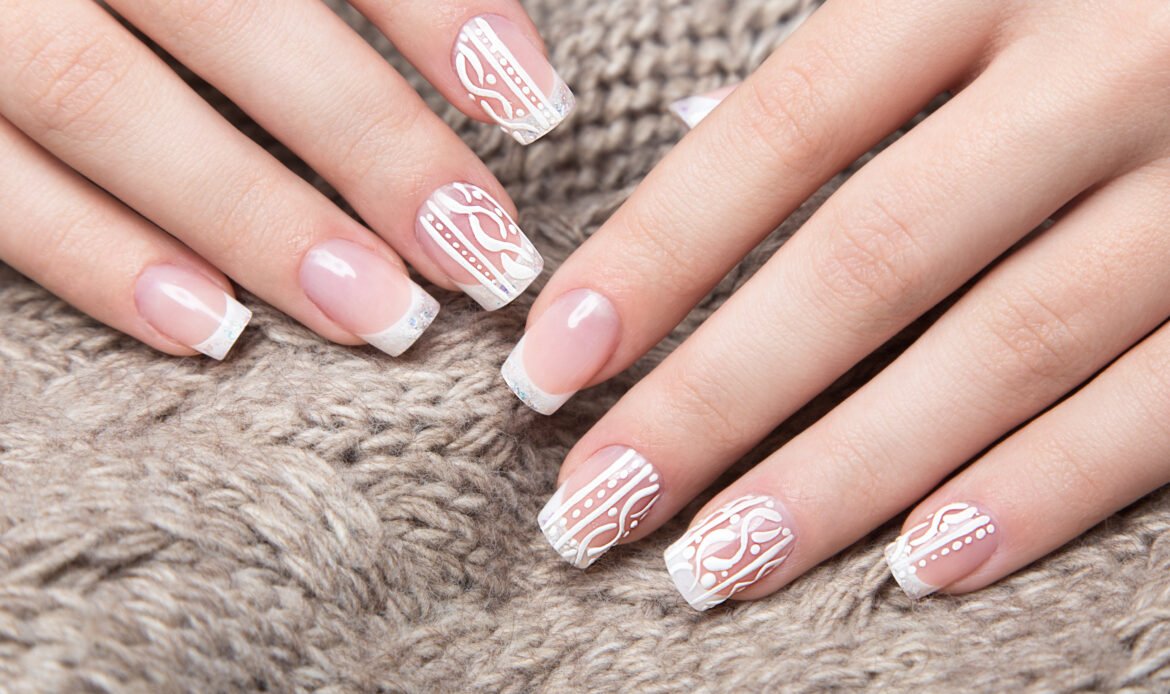
Dip systems combine a powder polymer layer with adhesive resins and activators. Resins and adhesives still belong to acrylate-adjacent families.
Their failure pattern usually appears as surface cracking and chipping at the free edge when the overlay remains too thin, followed by lifting after water infiltration when sealing fails near the cuticle.
Fiber reinforcement: wraps
Wrap systems solve a narrower problem. Used for localized repair rather than full structural support.
Their failure pattern often appears as edge lifting where the fiber terminates or as a visible ridge if the top layer fails to level the surface.
That comparison condenses a larger pattern. Durability tends to rise with rigidity and thickness, but removal damage and sensitization burden rise with it. Clinical publications repeatedly describe periungual dermatitis and onycholysis in association with enhancement routines, and they identify allergic contact dermatitis as a recurring endpoint for acrylate-containing systems.
Strengthening versus modeling: matching the method to the nail and the client’s routine
“Strengthening” sounds biological, yet the nail plate behaves like dead keratin. Coatings redistribute load; they do not improve tissue physiology. A more accurate service discussion separates three goals:
Modeling changes length, shape, and stress geometry.
Reinforcement reduces bending, slows splitting, and improves wear.
Camouflage improves appearance without structural demand.
From a classification standpoint, selection should start with architecture and removal tolerance, then move backward into chemistry.
| Decision point | Assessment | Selection logic |
| Goal | Length vs reinforcement vs appearance | Structural systems for length; overlays for reinforcement; thin coatings for appearance |
| Nail condition | Thinning, peeling, onycholysis, eczema history | Fragile plates → gentle prep and low-trauma removal; dermatitis history → minimize exposure |
| Wear frequency | Weekly change vs extended wear | Frequent changes → soak-off systems; long wear → stable file-off architecture |
| Sensitization | Prior reactions to gels, adhesives, resins | Avoid high-exposure acrylate systems when reactions are present |
| UV tolerance | Photosensitivity, exposure concerns | Reduce lamp dependence or strictly control curing |
| Lifestyle load | Water, solvents, manual work | High load → short structured overlays instead of long rigid extensions |
This algorithm imposes one discipline: classify first, customize second. That sequence reduces one of the most common mismatches in salon work: thin systems asked to support long length, rigid systems applied flat, and frequent-change clients placed into high-filing removal cycles.
Safety and long-term outcomes: where the actual risk concentrates
Two pathways dominate: biology and engineering.
The biological pathway centers on sensitization and inflammation. Acrylate and methacrylate exposure sits at the center of reported allergic contact dermatitis patterns linked to nail cosmetics. A systematic review identified allergic contact dermatitis as the most frequently reported adverse outcome in gel manicure studies and documented similar clinical presentations in acrylic systems, including periungual erythema, swelling, onycholysis, and nail plate dystrophy. Subsequent clinical observations link repeated exposure and incomplete curing with the persistence and severity of these reactions.
In operational terms, salons control four practical levers that lower risk: keep product off the skin, cure exactly according to the manufacturer’s instructions, limit dust dispersion, and stop compensating for weak adhesion through aggressive etching. None of those measures require a new product category. They require procedural discipline.
The engineering pathway centers on dose, geometry, and removal. Geometry often fails long before the client notices. Flat overlays flex too much, lift, and allow water ingress. Overbuilt apexes move the center of gravity forward and turn minor impacts into leverage fractures. Every method class has a recognizable failure signature, and that signature becomes predictable once the class has been identified.
The current lamp literature supports a restrained reading rather than alarm or dismissal. The 2025 scoping review described predominantly UVA output, major variability across devices, and laboratory evidence of DNA damage, while modeled risk for routine exposure often remained low and direct causal links to carcinoma still lacked definitive confirmation. The evidence supports a cautious professional position: long-term frequent users should receive informed discussion of lamp exposure, and device quality control should matter in salon purchasing because irradiance varies and repeated procedures increase cumulative dose.
Classification stops marketing language from directing service selection. A modern system reads more accurately as a three-part label: polymer family, built structure, and removal route. That label predicts failure pattern, maintenance schedule, and risk hotspots. Outcome quality improves when method class is matched to use conditions and applied with controlled technique.